Preimplantation Genetic Testing (PGT) in Seville

At Viamed Fertility Institute, we know that the deepest wish of any couple is for their future baby to be born healthy. However, nature sometimes presents invisible challenges in the genetic load of embryos, which can make the journey more difficult. Preimplantation Genetic Testing (PGT), historically known in Spanish as DGP, is the high-complexity technique that allows us to analyse the chromosomes of the embryo before it is transferred to the uterus.

What is PGT or DGP and why does it make a difference?

Although many patients still refer to this technique as DGP, or Preimplantation Genetic Diagnosis, current medical terminology has evolved towards the concept of PGT, or Preimplantation Genetic Testing. In essence, both terms describe the same objective: carrying out a comprehensive genetic study of the embryo during its culture phase in the assisted reproduction laboratory.

This test makes a difference. By selecting only chromosomally healthy embryos, we not only increase pregnancy rates per transfer, but also significantly reduce the risk of miscarriage and the time needed for you to complete your family.


When do we recommend DGP/PGT?

At Viamed Fertility Institute, we understand that Preimplantation Genetic Testing should not be limited only to patients who have, or are carriers of, a genetic disease.

In addition, our medical team specifically recommends DGP/PGT in certain situations where the genetic risk is higher

Advanced maternal age

From the age of 35 to 38 onwards, the probability of chromosomal alterations in eggs naturally increases.

Recurrent miscarriage

When two or more pregnancy losses have occurred without an apparent cause.

Implantation failure

After several failed attempts with embryos that appeared to be of good morphological quality.

Severe male factor infertility

Serious alterations in the semen analysis or in sperm meiosis.

Types of Preimplantation Genetic Testing: which one is right for you?

Depending on your medical history, we apply different variants of the test:

PGT-A, or aneuploidy testing

This is what was traditionally known as “DGP for everyone”. The 23 pairs of chromosomes are analysed to rule out numerical alterations, such as Down syndrome or Edwards syndrome. It is key in cases of advanced maternal age.

PGT-M, for monogenic diseases

Specifically indicated for couples in which one or both partners are carriers of, or affected by, an inherited disease caused by an alteration in a single gene, such as cystic fibrosis, Huntington’s disease or muscular dystrophy. The aim is to analyse the embryos in order to identify those that are free from the family mutation before transfer to the uterus, thereby breaking the transmission of the disease to future generations. To carry this out, a prior suitability study, also known as an informative study, is required using blood samples from the couple and, in some cases, from direct relatives, in order to design a tailored probe for your case.

PGT-SR, for structural rearrangements

Designed for couples in which one of the parents is a carrier of a rearrangement in the structure of their chromosomes, such as translocations or inversions. Although the carrier is usually completely healthy because they have all their genetic material, only rearranged, the production of eggs or sperm can generate unbalanced gametes, with missing or extra DNA fragments. This often results in implantation failure, recurrent miscarriage or the birth of children with serious health problems. This test analyses embryos in order to select only those with a balanced or normal chromosomal structure, dramatically increasing the rate of ongoing pregnancy.

The step-by-step process: from the laboratory to your arms

Fertilisation and culture

The embryos develop in our laboratory in Seville until day 5 or 6, reaching the blastocyst stage.

Safe biopsy

We extract a small sample from the trophectoderm.

Vitrification

While the sample is sent for analysis, the embryo is frozen using high-security vitrification.

Result and transfer

Once we have confirmed which embryos are healthy, or euploid, we schedule the transfer to the uterus with maximum confidence in the chances of success.

Hospital safety: the value of embryo biopsy at Viamed Sevilla

Genetic analysis of the embryo is a highly complex hospital procedure. It requires extracting a few cells from the trophectoderm, the outer layer of the embryo on day 5, without compromising its viability. At Viamed Hospital Santa Ángela de la Cruz, this delicate procedure is carried out by our team of professionals using:

Precision laser technology

We perform minimally invasive micro-openings to guarantee the integrity of the embryo.

Controlled atmosphere

The embryo remains in state-of-the-art incubators under constant monitoring, ensuring an optimal environment throughout the entire process.

Support from Viamed Salud

Having the infrastructure of a leading hospital in Seville provides the reassurance that every step follows the strictest standards of biological quality.

FAQs: frequently asked questions about PGT in Seville

No. The technique is performed on the outer layer of the embryo, which will give rise to the placenta, and not on the inner cell mass, which will give rise to the baby. Thanks to the use of laser technology and the expertise of our embryologists, the embryo maintains its developmental potential intact.

The accuracy of the next-generation sequencing (NGS) techniques we use is above 99%. It is currently the most powerful diagnostic tool available in reproductive medicine.

Yes. By transferring a healthy embryo, we reduce the main cause of implantation failure and early miscarriage. This makes the path towards your baby shorter and less emotionally demanding.

Start your journey with maximum peace of mind

Do not leave your baby’s health to chance. Come to Viamed Fertility Institute and discover how our team of professionals in Seville can help you fulfil your dream with the safety that only a hospital environment can offer.

We are here to support you.

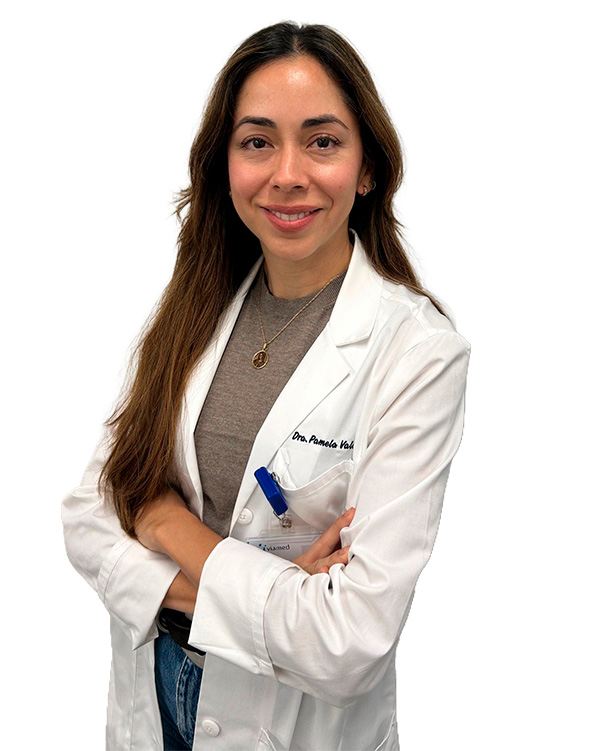
Dr. Pamela Valdivieso Mejía

gynaecologist and specialist in assisted reproduction

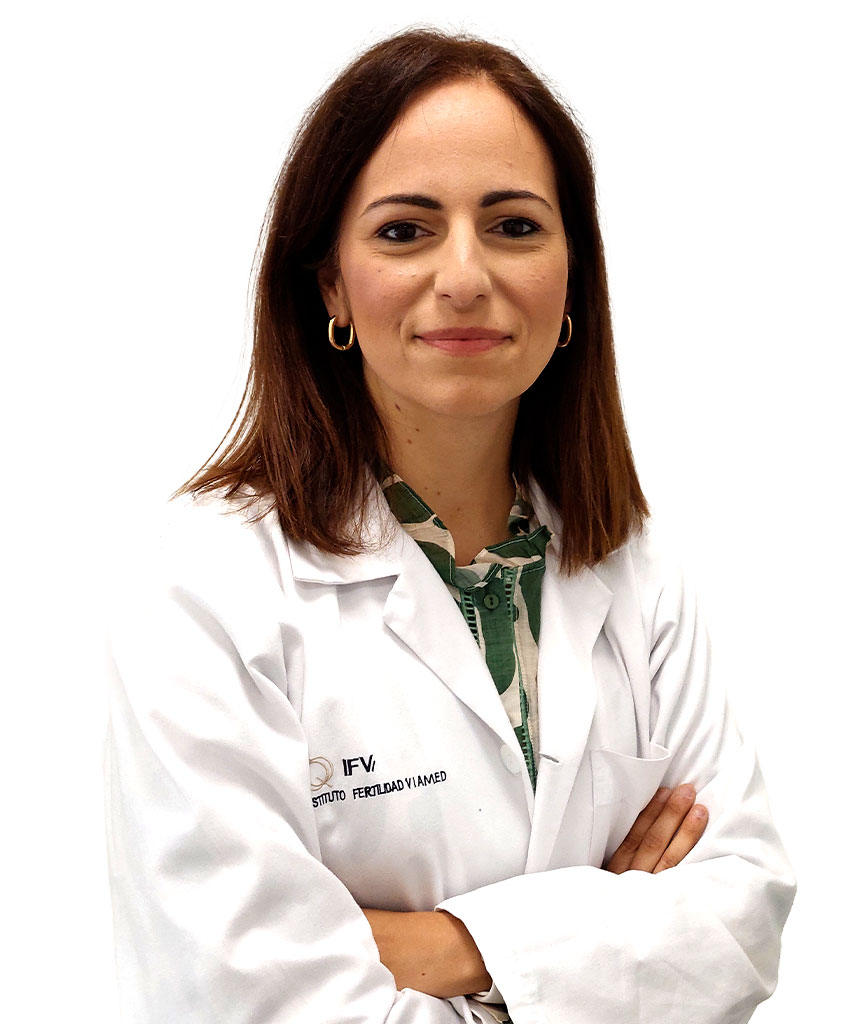
Dr. Silvia Valladares Jiménez

Specialist in Endocrinology and Nutrition

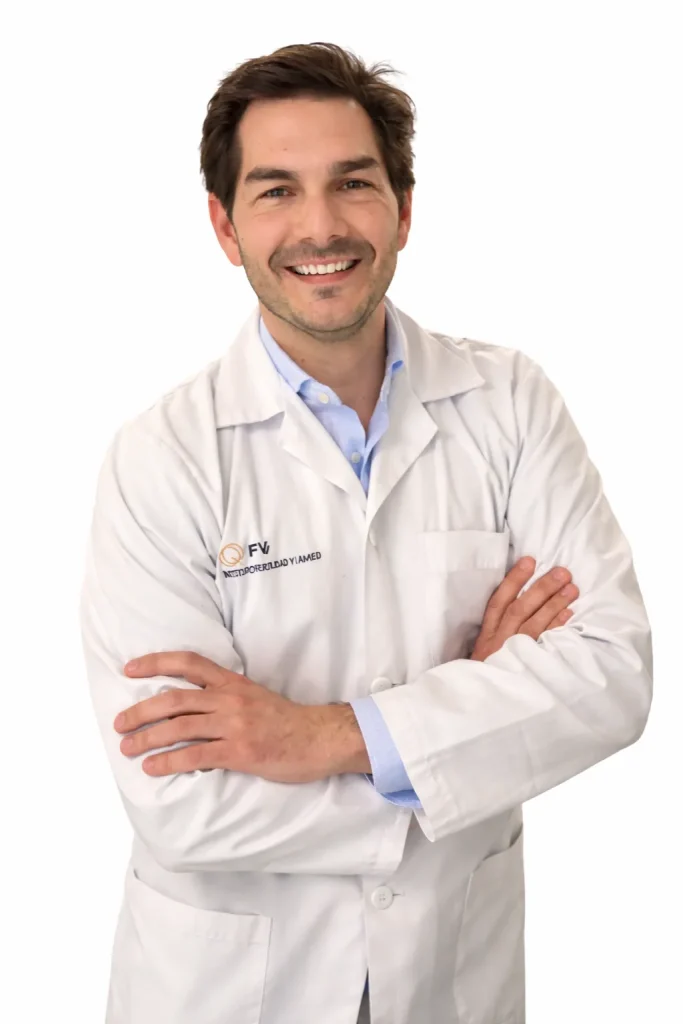
Dr. José Vilar

GYNAECOLOGIST

Education and Qualifications

  • Medical Degree from the University of Cádiz.
  • Specialist in Obstetrics and Gynaecology, Hospital Universitario Puerta del Mar, Cádiz.

Professional Experience

  • Gynaecologist at IVI Málaga (2013–2018).
  • Gynaecologist at Grupo Internacional UR (2020–2025).
  • Gynaecologist at IFV (2026–present).
  • Consultant in Obstetrics and Gynaecology at the Andalusian Health Service (2019–present).

Qualifications and Awards

  • PhD in Medicine from the University of Cádiz.

Scientific Activity

  • Co-author of several scientific publications in international journals and presentations delivered at national and international conferences.
  • Co-author of several chapters in specialised books on Gynaecology and Assisted Reproduction.

Ángeles Bretón

CLINICAL EMBRYOLOGIST

Dr. Carlos Javier Vega Reina

GYNAECOLOGIST

Dr. María Miró

IMMUNOLOGIST

Dr. María Eugenia Molina

HEMATOLOGIST

Elena Mantrana Bermejo

Gynecologist. Specialist in Reproductive Medicine

  • Degree in Medicine and Surgery from the University of Seville.
  • Specialty in Obstetrics and Gynecology at Hospital Universitario de Valme, Seville.
  • Master’s Degree in Human Reproduction from the Universidad Rey Juan Carlos.
  • Specialist Physician of the Andalusian Health Service in the South Health Management Area (AGSS) of Seville.
  • Coordinator of the Assisted Human Reproduction Unit of the Hospital Universitario de Valme, Seville.
  • Member of the Human Reproduction Advisory Committee of AGSS of Seville.
  • Member of the working group for the update of the Guide for Assisted Human Reproduction of the Ministry of Health of the Andalusian Regional Government.
  • Tutor of Specialist Doctors in Training of the Teaching Area of the University Hospital of Valme.
  • Clinical Tutor Medical Students University of Seville

Alberto Armijo

Gynecologist. Reproductive Medicine Specialist