Fertility treatment for endometriosis in Seville

Endometriosis is a silent condition that affects 10% of women, but its impact becomes decisive when trying to have a baby: between 30% and 50% of women with infertility or severe menstrual pain live with this disease. At Viamed Fertility Institute, we understand that treatment for endometriosis should not focus only on relieving pain, but on protecting your ability to become mothers.

From Viamed Hospital Santa Ángela de la Cruz, we approach this oestrogen-dependent disease with a highly complex hospital-based vision, designing a tailored plan for your Life Project.

What is endometriosis and why does it affect your fertility?

Endometriosis is defined as the presence of active endometrial tissue outside the uterus. This tissue responds to the hormones of the cycle in the same way as the internal endometrium, causing chronic inflammation and cysts. Its symptoms, such as dysmenorrhoea, dyspareunia or pelvic pain, are often the first warning sign.

Although its origin remains the subject of scientific debate, at our centre in Seville we work with the most solid theories in order to provide an authoritative diagnosis:

Retrograde menstruation:

Migration of cells through the fallopian tubes.

Lymphatic or vascular migration:

Movement of cells through the circulatory or lymphatic system.

Iatrogenic transplantation:

Cells displaced after surgical procedures, such as caesarean sections or episiotomies.

Coelomic metaplasia:

Transformation of cells in the peritoneal tissue.
This multifactorial and polygenic aetiology explains why treatment for endometriosis must be 100% personalised.

The impact of endometriosis on pregnancy

The relationship between endometriosis, fertility and pregnancy is complex. The disease can make conception more difficult in several ways. Our team of gynaecologists carefully analyses each case:

Ovarian reserve:

Endometriotic cysts can reduce the number of available eggs.

Oocyte and embryo quality:

Pelvic inflammation can reduce egg quality and make fertilisation more difficult.

Pelvic anatomy:

Adhesions can obstruct the fallopian tubes or limit their mobility.

Endometrial receptivity:

There may be an immunological alteration that makes it more difficult for the embryo to implant successfully.

IVF/ICSI: the most effective treatment for endometriosis

When the goal is pregnancy, In Vitro Fertilisation, or IVF/ICSI, is positioned as the most powerful tool. However, within the Viamed Salud environment, we apply superior safety protocols:

Safety during ovarian puncture:

Due to pelvic adhesions, organs may be displaced. Our team performs egg retrieval with great precision, combining experience and high-resolution ultrasound, reducing the risk of injury to organs and other structures close to the ovaries.

Antibiotic prophylaxis:

We apply rigorous hospital protocols to minimise any risk of infection after puncture.

Preservation of ovarian reserve:

We assess whether our patient is a candidate for surgery before, during or after treatment.

FAQs: questions about endometriosis and fertility

It is possible, but the chances are lower due to anatomical factors and egg quality. If a positive result has not been achieved after 6 months of trying, it is important to consult a specialist in Seville.

No. In fertility, we often avoid surgery in order not to damage healthy ovarian tissue. Treatment focuses on assisted reproduction techniques that “bypass” the obstacles caused by the disease.

Pelvic inflammation can lead to poor embryo quality in some cases. For this reason, at Viamed we use advanced culture technology to select only the embryos with the greatest implantation potential.

Your dream is stronger than endometriosis

Do not allow the diagnosis to be the end of your journey. Come to Hospital Santa Ángela de la Cruz and discover how the most advanced treatment for endometriosis in Seville can help you complete your Life Project.

We are here to support you.

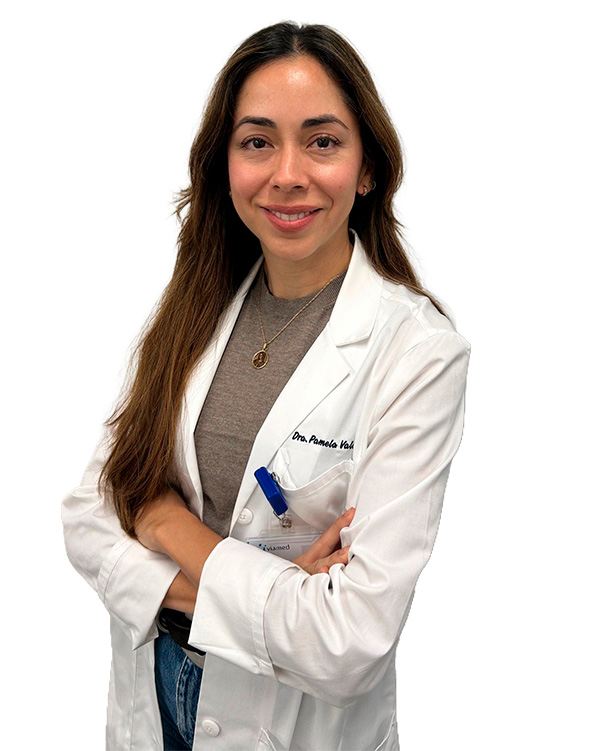
Dr. Pamela Valdivieso Mejía

gynaecologist and specialist in assisted reproduction

Dr. Silvia Valladares Jiménez

Specialist in Endocrinology and Nutrition

Dr. José Vilar

GYNAECOLOGIST

Education and Qualifications

  • Medical Degree from the University of Cádiz.
  • Specialist in Obstetrics and Gynaecology, Hospital Universitario Puerta del Mar, Cádiz.

Professional Experience

  • Gynaecologist at IVI Málaga (2013–2018).
  • Gynaecologist at Grupo Internacional UR (2020–2025).
  • Gynaecologist at IFV (2026–present).
  • Consultant in Obstetrics and Gynaecology at the Andalusian Health Service (2019–present).

Qualifications and Awards

  • PhD in Medicine from the University of Cádiz.

Scientific Activity

  • Co-author of several scientific publications in international journals and presentations delivered at national and international conferences.
  • Co-author of several chapters in specialised books on Gynaecology and Assisted Reproduction.

Ángeles Bretón

CLINICAL EMBRYOLOGIST

Dr. Carlos Javier Vega Reina

GYNAECOLOGIST

Dr. María Miró

IMMUNOLOGIST

Dr. María Eugenia Molina

HEMATOLOGIST

Elena Mantrana Bermejo

Gynecologist. Specialist in Reproductive Medicine

  • Degree in Medicine and Surgery from the University of Seville.
  • Specialty in Obstetrics and Gynecology at Hospital Universitario de Valme, Seville.
  • Master’s Degree in Human Reproduction from the Universidad Rey Juan Carlos.
  • Specialist Physician of the Andalusian Health Service in the South Health Management Area (AGSS) of Seville.
  • Coordinator of the Assisted Human Reproduction Unit of the Hospital Universitario de Valme, Seville.
  • Member of the Human Reproduction Advisory Committee of AGSS of Seville.
  • Member of the working group for the update of the Guide for Assisted Human Reproduction of the Ministry of Health of the Andalusian Regional Government.
  • Tutor of Specialist Doctors in Training of the Teaching Area of the University Hospital of Valme.
  • Clinical Tutor Medical Students University of Seville

Alberto Armijo

Gynecologist. Reproductive Medicine Specialist