Specialities in reproductive medicine

Fertility is a complex process involving multiple systems within the body. Although in many cases the study and treatment focus on assisted reproduction, there are situations in which it becomes necessary to broaden the assessment and involve other medical specialists.

At Viamed Fertility Institute, we work with a multidisciplinary and coordinated approach to provide comprehensive, personalised care. Depending on each patient’s characteristics, the reproductive process may be complemented by the involvement of specialists in reproductive immunology, haematology, urology and andrology, endocrinology or specialist psychology.

This approach allows us to assess, from a global perspective, the factors that may influence fertility, embryo implantation or the development of pregnancy, always based on the available scientific evidence and adapting the study to each case.

A multidisciplinary approach to the study of fertility

Infertility can have many different causes and, in some cases, hormonal, immunological, metabolic, vascular or male factors may be involved and require a specific assessment.

For this reason, in selected cases, our assisted reproduction team works in coordination with other medical specialists to complete the diagnosis and optimise conditions before or during fertility treatment.

The involvement of these professionals may be especially relevant in situations such as:

Repeated implantation failure

Recurrent miscarriage

Hormonal or metabolic alterations

Suspected coagulation disorders

Alterations in the male factor

Reproductive difficulties with no apparent cause

Need for emotional support during the process

The aim is to offer a comprehensive view of the patient and design strategies adapted to each clinical situation.

Medical specialities at IFV

Reproductive immunology and fertility

Pregnancy requires a very precise balance between the maternal immune system and embryo development. During pregnancy, the body must allow implantation and embryo development through mechanisms of immune tolerance. In certain specific cases, such as repeated implantation failure, recurrent miscarriage or specific analytical alterations, the involvement of specialists in reproductive immunology may be considered. This speciality studies possible immune alterations that may influence embryo implantation or the early stages of pregnancy. Reproductive immunology is an area of ongoing scientific development, which is why each case must be analysed individually.

Haematology and coagulation in assisted reproduction

Embryo implantation and the early development of pregnancy depend, among other factors, on adequate vascularisation of the endometrium and proper functioning of the blood circulation. In patients with a history of recurrent miscarriage or suspected coagulation disorders, assessment by specialists in haematology may be recommended. A haematological study makes it possible to analyse possible disorders related to coagulation, such as certain thrombophilias or other alterations that may influence pregnancy development. When an alteration is detected, specialised follow-up allows clinical management to be individualised during fertility treatment and pregnancy.

Urology and andrology: the role of male fertility

Fertility is a shared process, and the male factor is present in approximately half of infertility cases. For this reason, the study of the male partner is a fundamental part of comprehensive reproductive assessment. The specialist in urology and andrology analyses aspects related to:

Semen quality

Hormonal alterations

Varicocele

Infections

Conditions affecting the male reproductive system

Azoospermia or other sperm alterations

In certain situations, medical treatments, surgical procedures or complementary techniques may be recommended in order to optimise reproductive chances. In specific cases of absence of sperm in the ejaculate, testicular biopsy may also be considered to recover sperm that can be used in in vitro fertilisation treatments.

Specialist psychology in assisted reproduction

The reproductive process can have a significant emotional impact. Uncertainty, expectations, treatment time or clinical decision-making can generate anxiety, stress or psychological strain. For this reason, emotional support forms part of the comprehensive approach to fertility. Specialist psychological care helps patients to:

Manage the emotional impact of the diagnosis

Cope with reproductive treatments

Reduce anxiety and stress levels

Improve adaptation to the process

Facilitate decision-making

At Viamed Fertility Institute, we offer specialist psychological support in reproduction to accompany patients through the different stages of treatment.

Endocrinology, metabolism and fertility

The endocrine system regulates essential reproductive functions such as ovulation, sperm production and preparation of the endometrium for implantation.

Certain hormonal and metabolic alterations can have a significant influence on both female and male fertility.

The most common situations include:

Thyroid disorders

Polyendocrine Metabolic Ovarian Syndrome (SOMP)

Hyperprolactinaemia

Insulin resistance

Metabolic alterations

Obesity or low body weight

In addition, nutritional and metabolic status can influence oocyte quality, sperm function, endometrial receptivity and pregnancy development. Endocrinological assessment makes it possible to optimise hormonal and metabolic balance before starting fertility treatment and during pregnancy.

A coordinated team to provide comprehensive care

Every reproductive process is different and not all patients need the involvement of other specialities. However, when the situation requires it, having a multidisciplinary team allows the study to be broadened and more complete care to be offered.

At Viamed Fertility Institute, we work in coordination between assisted reproduction specialists and other medical areas to assess each case individually and accompany our patients throughout the entire process.

Our aim is to provide comprehensive care that considers the medical, hormonal, metabolic, emotional and reproductive aspects involved in fertility.

Frequently asked questions about the multidisciplinary approach to fertility

No. The involvement of other specialists is only recommended when there is a clinical indication or specific circumstances that advise broadening the study.

It may be considered in situations such as recurrent miscarriage, implantation failure, hormonal alterations, male factor infertility or suspected immunological or coagulation disorders.

Not necessarily. In some cases, several factors are involved at the same time, so a multidisciplinary assessment can provide a more complete view.

Yes. The study of the male partner is an essential part of reproductive diagnosis and may account for up to half of infertility cases.

Emotional support can be beneficial during the reproductive process and helps manage the psychological impact associated with treatments and uncertainty.
We are here to support you.

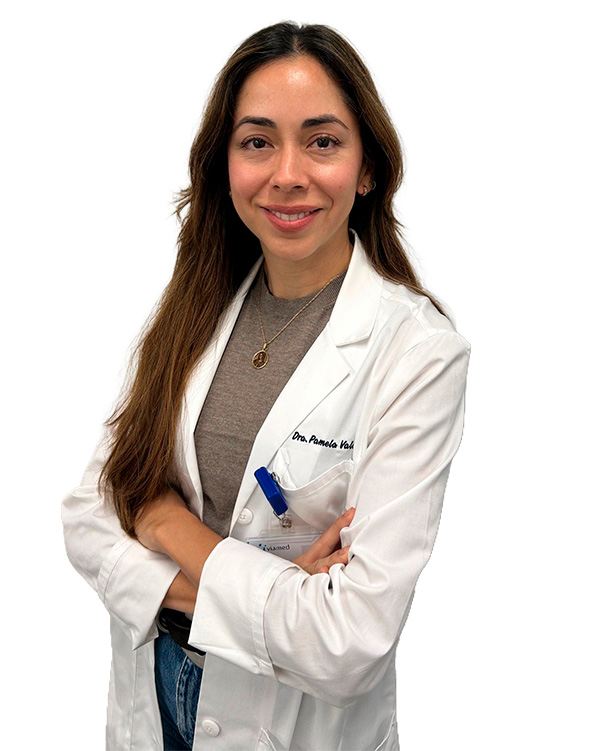
Dr. Pamela Valdivieso Mejía

gynaecologist and specialist in assisted reproduction

Dr. Silvia Valladares Jiménez

Specialist in Endocrinology and Nutrition

Dr. José Vilar

GYNAECOLOGIST

Ángeles Bretón

CLINICAL EMBRYOLOGIST

Dr. Carlos Javier Vega Reina

GYNAECOLOGIST

Dr. María Miró

IMMUNOLOGIST

Dr. María Eugenia Molina

HEMATOLOGIST

Elena Mantrana Bermejo

Gynecologist. Specialist in Reproductive Medicine

  • Degree in Medicine and Surgery from the University of Seville.
  • Specialty in Obstetrics and Gynecology at Hospital Universitario de Valme, Seville.
  • Master’s Degree in Human Reproduction from the Universidad Rey Juan Carlos.
  • Specialist Physician of the Andalusian Health Service in the South Health Management Area (AGSS) of Seville.
  • Coordinator of the Assisted Human Reproduction Unit of the Hospital Universitario de Valme, Seville.
  • Member of the Human Reproduction Advisory Committee of AGSS of Seville.
  • Member of the working group for the update of the Guide for Assisted Human Reproduction of the Ministry of Health of the Andalusian Regional Government.
  • Tutor of Specialist Doctors in Training of the Teaching Area of the University Hospital of Valme.
  • Clinical Tutor Medical Students University of Seville

Alberto Armijo

Gynecologist. Reproductive Medicine Specialist