Treatments for becoming a mother at an advanced age in Seville

In recent decades, we have witnessed a profound social change in the Western world. The tendency to postpone motherhood is now a reality, and at Viamed Fertility Institute we understand this perfectly: your Life Project may sometimes require waiting for the right personal or professional moment. However, although society has changed, biology still follows its own timeline.

From Viamed Hospital Santa Ángela de la Cruz, we approach advanced maternal age with a combination of rigorous science and empathy, offering highly complex hospital-based tools so that the time factor does not become an insurmountable obstacle.

The biology of time: why does fertility decline?

Unlike men, women are born with a finite number of eggs that do not replicate during adult life. This ovarian reserve naturally decreases from birth. But the challenge is not only quantity, but also quality.

According to reference studies such as Heffner et al., fertility loss becomes especially critical from an average age of 37. From that point onwards, the probability of pregnancy decreases while the miscarriage rate increases exponentially.

The challenge of quality: aneuploidies and the meiotic spindle

Why do eggs age? The answer lies in cellular machinery. With age, the rate of aneuploidies increases, meaning errors in the number of chromosomes in the egg. This occurs mainly due to failures in the assembly of the meiotic spindle, the structure responsible for separating chromosomes correctly.

In addition to these genetic errors, advanced maternal age is associated with:

Oxidative metabolism:

An increase in cellular oxidation and poorer functioning of natural antioxidant mechanisms.

Morphological alterations:

Inadequate maturation of the egg cytoplasm.

Associated conditions:

A higher incidence of endometriosis, leiomyomas, or fibroids, and tubal problems that complicate the infertility picture.

Becoming a mother at 40: reality and possibilities in Seville

This is the question we hear most often in consultation: “Can I become a mother at 40?” The answer is yes, but the approach must be high-resolution. At this age, time is the most valuable resource, so we cannot leave success to chance.

To achieve pregnancy at the age of 40, our excellent team of professionals combines treatment for low ovarian reserve with the most advanced embryo selection techniques. The goal is not only to achieve a positive result, but to ensure that the baby is born healthy.

PGT-A and Time-Lapse with AI: the necessary genetic filter

Given that, from the age of 40, a high proportion of embryos may present chromosomal alterations, at IFV we use cutting-edge technology to identify them:

PGT-A, or Preimplantation Genetic Testing:

Through an embryo biopsy, we analyse the chromosomes of the embryo before transferring it to the uterus. This allows us to rule out embryos with aneuploidies, drastically reducing the miscarriage rate and the risk of chromosomal diseases.

Time-Lapse incubators with Artificial Intelligence:

These systems allow us to observe embryo development minute by minute. AI helps classify embryos with the highest implantation potential, based on cell division patterns that indicate greater biological viability.

FAQs: questions about advanced maternal age

Thanks to the highly complex hospital environment of Viamed Hospital Santa Ángela de la Cruz, risks are reduced through comprehensive prenatal monitoring. We have all medical specialties available to care for both mother and baby.

If, after several attempts, the quality of your own eggs does not allow us to obtain healthy embryos, in Seville we offer egg donation programmes with excellent success rates, allowing you to fulfil your dream of becoming parents with complete safety.

Because it helps avoid the emotional strain of transferring embryos that we know have a lower probability of leading to an ongoing pregnancy. By selecting only chromosomally healthy embryos, the time needed to achieve pregnancy is considerably shortened.

Your Life Project does not have to wait any longer

Choose science and hospital support in Seville. Do not let statistics hold you back. Come and meet us, and together we will design the technological strategy your motherhood journey needs.

We are here to support you.

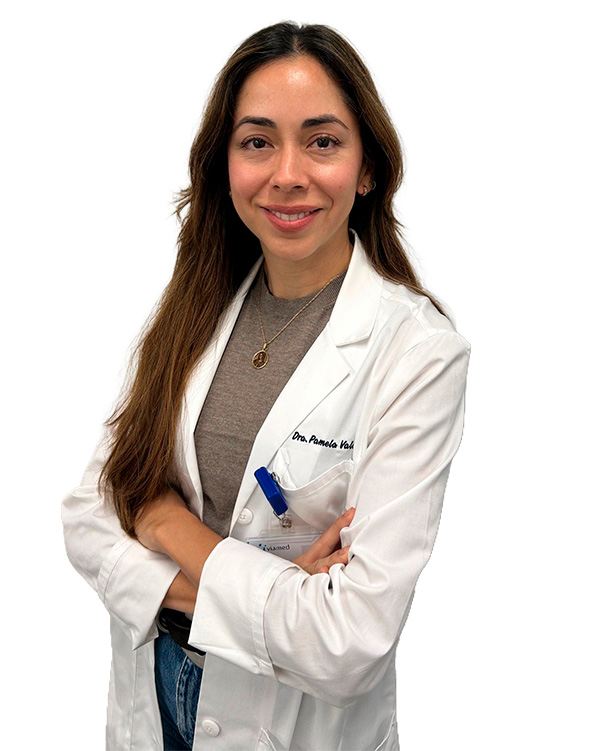
Dr. Pamela Valdivieso Mejía

gynaecologist and specialist in assisted reproduction

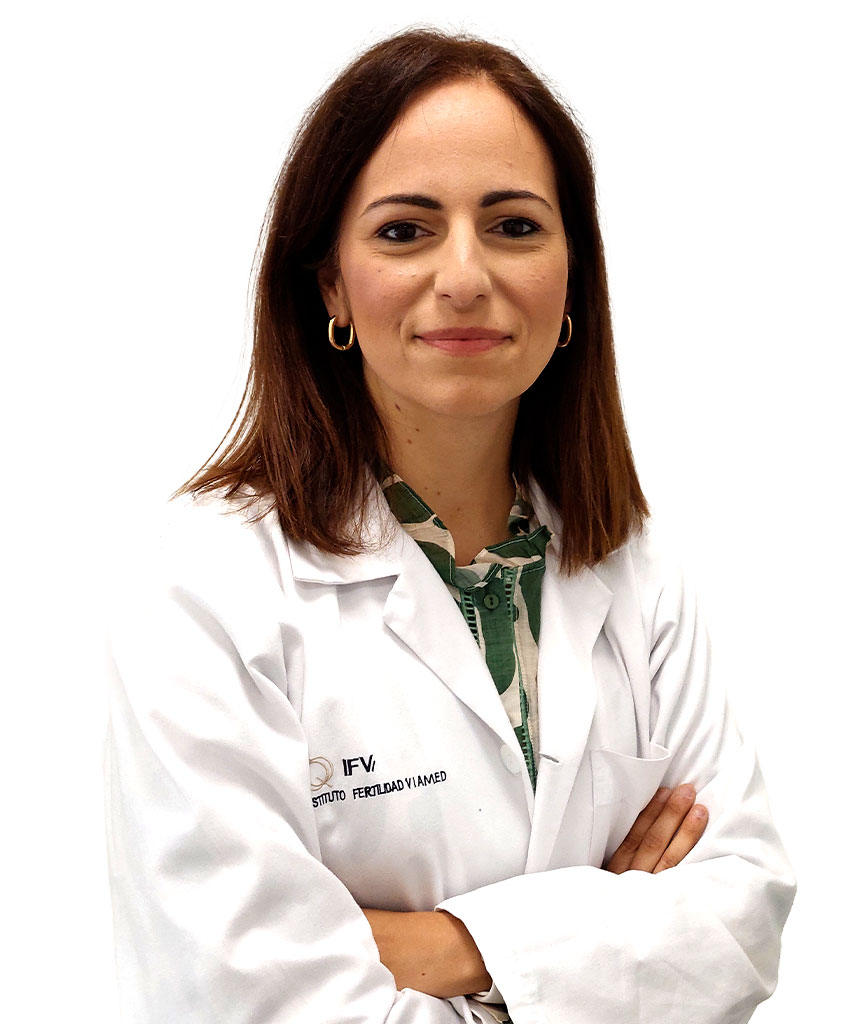
Dr. Silvia Valladares Jiménez

Specialist in Endocrinology and Nutrition

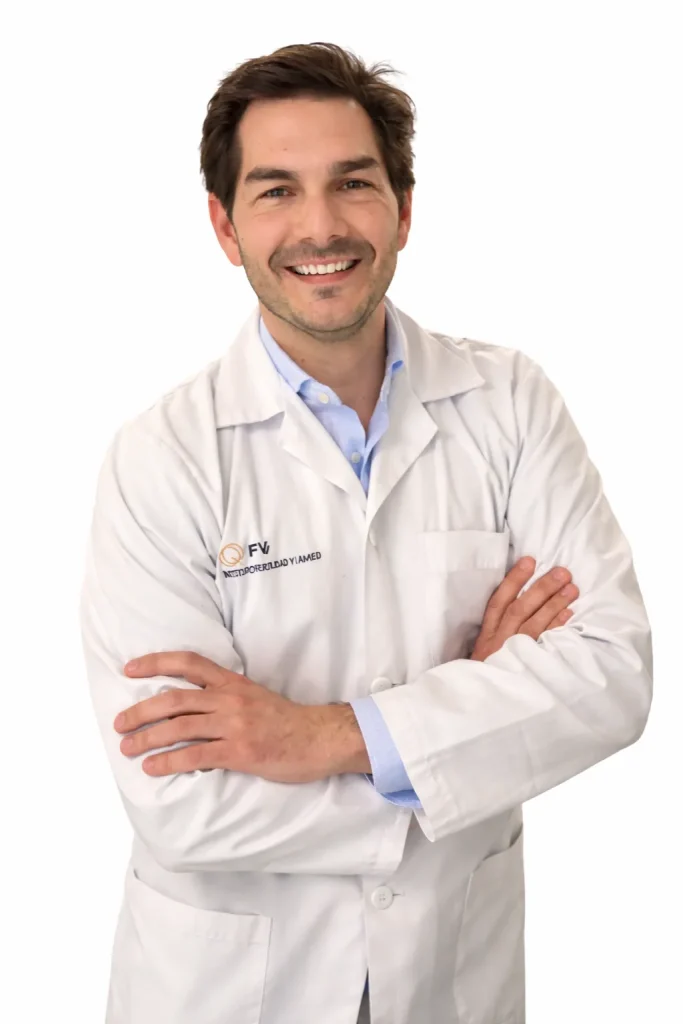
Dr. José Vilar

GYNAECOLOGIST

Education and Qualifications

  • Medical Degree from the University of Cádiz.
  • Specialist in Obstetrics and Gynaecology, Hospital Universitario Puerta del Mar, Cádiz.

Professional Experience

  • Gynaecologist at IVI Málaga (2013–2018).
  • Gynaecologist at Grupo Internacional UR (2020–2025).
  • Gynaecologist at IFV (2026–present).
  • Consultant in Obstetrics and Gynaecology at the Andalusian Health Service (2019–present).

Qualifications and Awards

  • PhD in Medicine from the University of Cádiz.

Scientific Activity

  • Co-author of several scientific publications in international journals and presentations delivered at national and international conferences.
  • Co-author of several chapters in specialised books on Gynaecology and Assisted Reproduction.

Ángeles Bretón

CLINICAL EMBRYOLOGIST

Dr. Carlos Javier Vega Reina

GYNAECOLOGIST

Dr. María Miró

IMMUNOLOGIST

Dr. María Eugenia Molina

HEMATOLOGIST

Elena Mantrana Bermejo

Gynecologist. Specialist in Reproductive Medicine

  • Degree in Medicine and Surgery from the University of Seville.
  • Specialty in Obstetrics and Gynecology at Hospital Universitario de Valme, Seville.
  • Master’s Degree in Human Reproduction from the Universidad Rey Juan Carlos.
  • Specialist Physician of the Andalusian Health Service in the South Health Management Area (AGSS) of Seville.
  • Coordinator of the Assisted Human Reproduction Unit of the Hospital Universitario de Valme, Seville.
  • Member of the Human Reproduction Advisory Committee of AGSS of Seville.
  • Member of the working group for the update of the Guide for Assisted Human Reproduction of the Ministry of Health of the Andalusian Regional Government.
  • Tutor of Specialist Doctors in Training of the Teaching Area of the University Hospital of Valme.
  • Clinical Tutor Medical Students University of Seville

Alberto Armijo

Gynecologist. Reproductive Medicine Specialist