Artificial Intelligence for the Study of Oocyte Potential in Seville

At Viamed Fertility Institute, we lead the application of the latest medical advances in Andalusia. In line with this commitment within Viamed Hospital Santa Ángela de la Cruz, we incorporate Artificial Intelligence (AI) for advanced oocyte image analysis. This cutting-edge technology allows us to estimate the real potential of your eggs with maximum precision before preserving them, providing key scientific certainty for your future peace of mind.

How does Artificial Intelligence measure egg quality?

Traditionally, the assessment of egg quality in the assisted reproduction laboratory was limited to visual morphological observation by the embryologist. Today, thanks to the use of advanced algorithms, oocyte image analysis has taken a qualitative leap forward:

Search for predictive patterns

The software has analysed thousands of microscopic images in search of predictive geometric and cellular patterns.

Detection of invisible details

The system is able to identify structural aspects of the egg that are completely invisible to the human eye.

Expert assistance in the laboratory

This tool acts as a high-precision assistant for the embryologist. As a machine learning system that continuously learns and improves its predictive power, it allows us to objectively estimate the pregnancy potential of oocytes based solely on a high-resolution photograph of them.


Who is AI-based oocyte potential analysis recommended for?

This advanced, high-resolution diagnostic technology is integrated across our protocols in Seville to help define the best medical strategy. It is especially recommended in the following cases:

Women undergoing fertility preservation for social reasons

Recommended for those who decide to delay motherhood and seek an objective assessment of the potential of their eggs for the future.

Patients in oncological or medical preservation programmes

This allows the quality of the oocytes to be cryopreserved immediately before starting treatments that may compromise ovarian reserve to be managed with maximum rigour.

Patients who need an oocyte accumulation strategy

Essential for women with low response to stimulation or low ovarian reserve who need several cycles to accumulate samples, helping to determine the ideal time to complete the process.

Women with suspected poor ovarian quality due to advanced maternal age

Especially useful from the age of 35 to 38 onwards, an age range in which egg quality naturally decreases and a precision tool is required to assess biological viability.

Advantages of Artificial Intelligence in egg vitrification

This technology is a revolutionary tool for properly managing fertility preservation treatments in Seville. One of the greatest challenges when freezing eggs is determining whether the quantity stored is sufficient to ensure future success.

AI-based oocyte potential analysis resolves this uncertainty in a personalised way:

High-resolution diagnosis

It helps us decide, using objective data, whether the number of vitrified eggs is sufficient to support a future pregnancy.

Optimised medical planning

If the estimated potential of the sample is low, AI allows us to advise the patient with complete transparency on whether it is necessary to undergo a new stimulation treatment to accumulate more oocytes.

Violet® software by Future Fertility

Cutting-edge oocyte selection

At our centre in Seville, we are committed to maximum transparency and medical rigour. For this reason, in our high-complexity hospital laboratory we use Violet® software, a registered trademark developed by Future Fertility, a leading company in reproductive bioinformatics..

The Violet® system generates a detailed oocyte quality report for the patient, supported by scientific validation. If you would like to learn more about the technical operation of this tool, you can visit the official Future Fertility website.

FAQs: frequently asked questions about AI and egg quality in Seville

Not at all. It is a 100% non-invasive technique. The software analyses quality through a digitised photograph captured in the laboratory, so the eggs undergo no physical manipulation or additional cellular stress before immediate vitrification at -196 °C with complete safety.

Although maternal age is a critical factor in fertility, ovarian reserve and ovarian quality vary from one individual to another. Two women of the same age may have very different reproductive potential.

The software analyses your cells in a unique and exclusive way, eliminating general statistics in order to offer a real prognosis for your specific case.

Yes. The algorithms are specifically trained to predict the potential of each oocyte to form a good-quality embryo, shortening times and optimising the steps needed to achieve the birth of a healthy baby.

Your future fertility deserves more accurate answers

Thanks to advanced analysis using artificial intelligence, we can assess the potential of your eggs before preserving them and design a personalised strategy for your future motherhood.

We are here to support you.

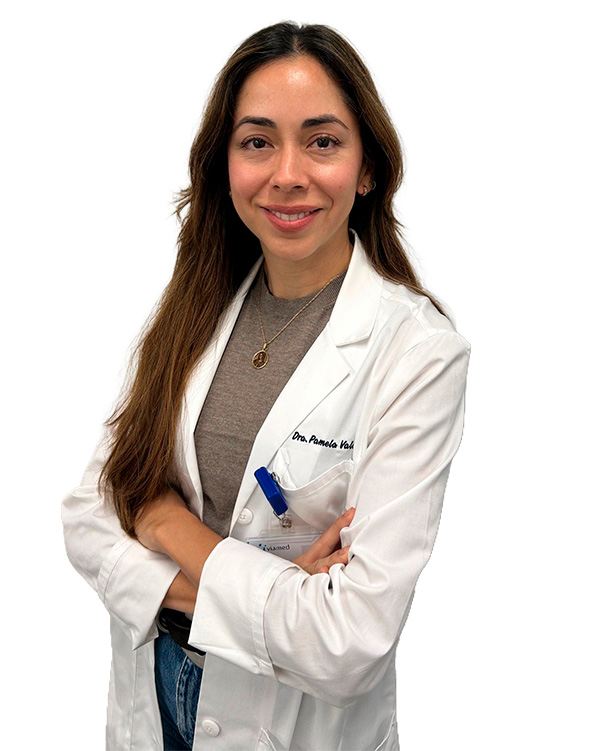
Dr. Pamela Valdivieso Mejía

gynaecologist and specialist in assisted reproduction

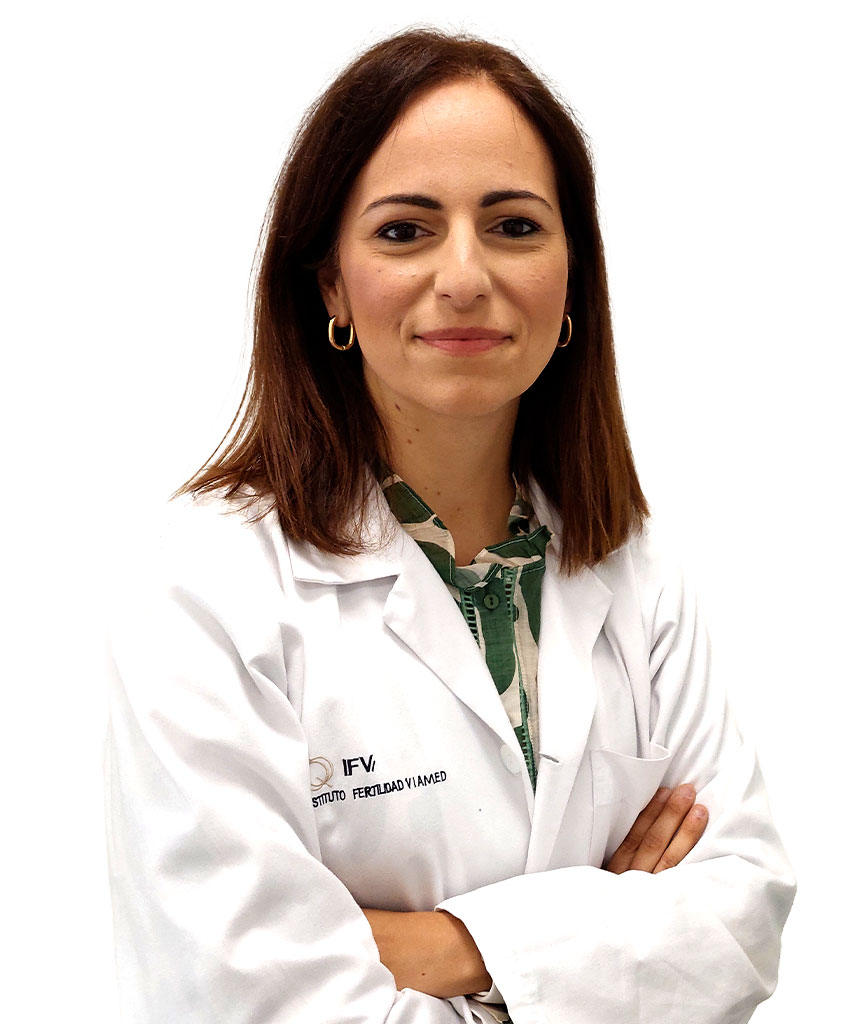
Dr. Silvia Valladares Jiménez

Specialist in Endocrinology and Nutrition

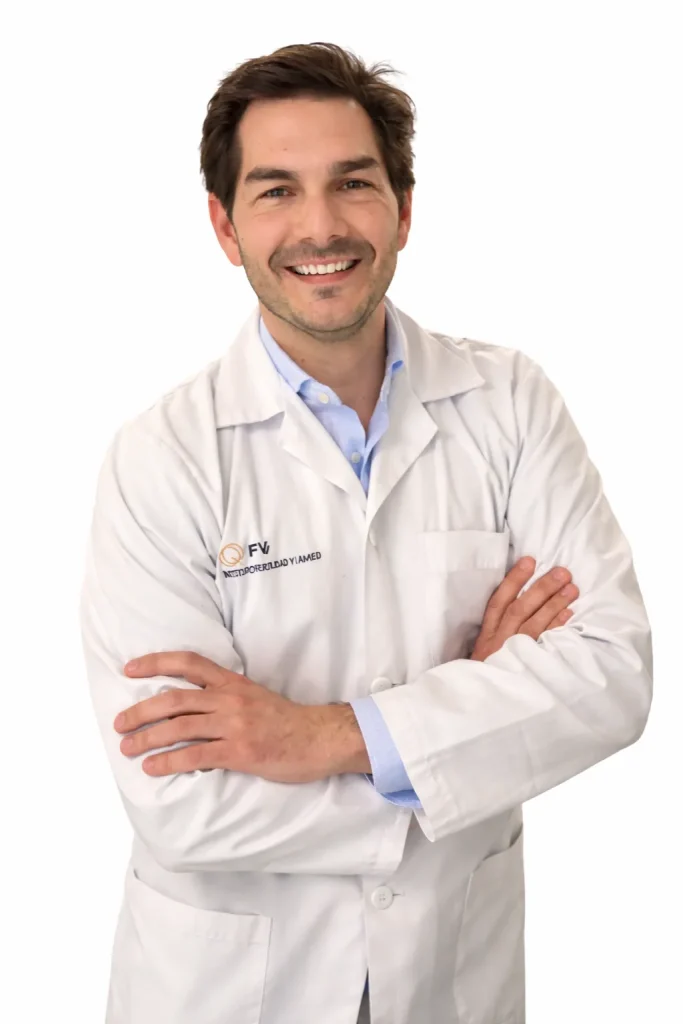
Dr. José Vilar

GYNAECOLOGIST

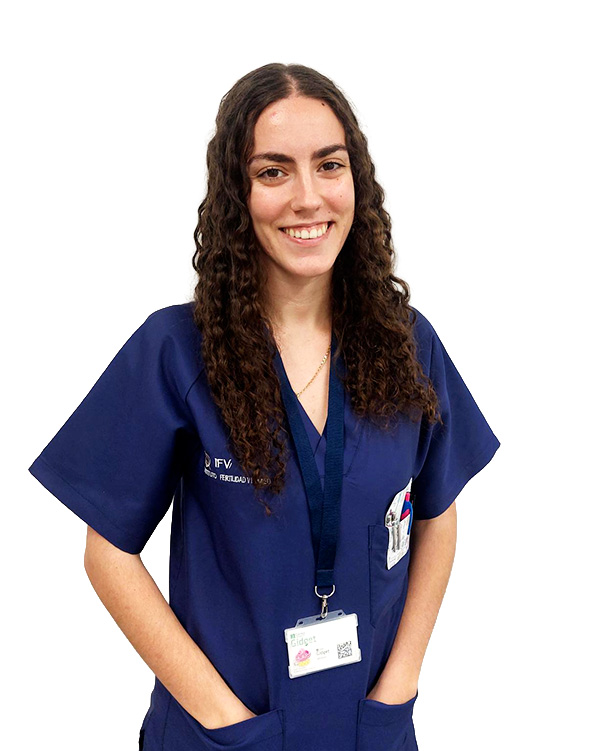
Ángeles Bretón

CLINICAL EMBRYOLOGIST

Dr. Carlos Javier Vega Reina

GYNAECOLOGIST

Dr. María Miró

IMMUNOLOGIST

Dr. María Eugenia Molina

HEMATOLOGIST

Elena Mantrana Bermejo

Gynecologist. Specialist in Reproductive Medicine

  • Degree in Medicine and Surgery from the University of Seville.
  • Specialty in Obstetrics and Gynecology at Hospital Universitario de Valme, Seville.
  • Master’s Degree in Human Reproduction from the Universidad Rey Juan Carlos.
  • Specialist Physician of the Andalusian Health Service in the South Health Management Area (AGSS) of Seville.
  • Coordinator of the Assisted Human Reproduction Unit of the Hospital Universitario de Valme, Seville.
  • Member of the Human Reproduction Advisory Committee of AGSS of Seville.
  • Member of the working group for the update of the Guide for Assisted Human Reproduction of the Ministry of Health of the Andalusian Regional Government.
  • Tutor of Specialist Doctors in Training of the Teaching Area of the University Hospital of Valme.
  • Clinical Tutor Medical Students University of Seville

Alberto Armijo

Gynecologist. Reproductive Medicine Specialist