Treatments for implantation failure in Seville: answers when the positive result resists

Implantation failure is probably one of the most bewildering moments in an assisted reproduction treatment. There is nothing more frustrating for a couple than undergoing a transfer with “good-quality” embryos and once again receiving a negative result.

What is implantation failure and when should we investigate?

We speak of recurrent implantation failure when pregnancy is not achieved after several In Vitro Fertilisation, or IVF, attempts using embryos of optimal quality. Although there is no strict consensus on the number of attempts, at our clinic in Seville we propose an in-depth study after 2 or 3 failed embryo transfers.

At this point, our team of professionals stops looking only at the surface and analyses the three pillars of success: the embryo, the uterus, or endometrium, and the mother’s systemic environment.

The embryo factor: beyond appearance

Sometimes, an embryo that looks “perfect” visually hides problems that prevent implantation:

Genetic problems:

An embryo may have very good morphology under the microscope but still present chromosomal alterations. In these cases, Preimplantation Genetic Testing, or PGT-A, is the key tool to ensure that we transfer only healthy embryos.

The endometrial factor: preparing the “nest”

Even with the best embryo in the world, if the “ground” is not ready, pregnancy will not occur. At IFV Sevilla, we study the endometrium from three critical perspectives:

Receptivity profile:

We use the most advanced tests to identify the exact window of implantation. Not all women are receptive at the same moment; some need the transfer to be shifted by a few hours in order to coincide with their peak receptivity.

Microbiota and endometritis:

We analyse the balance of bacteria in the uterus. An altered microbiota or silent inflammation, known as chronic endometritis, may be the invisible cause of embryo rejection.

360-degree vision: a multidisciplinary approach in Seville

Implantation failure rarely has a single cause. For this reason, the great advantage of being integrated into Viamed Hospital Santa Ángela de la Cruz is that we have immediate support from other specialties:

Poor-quality gametes:

We assess whether egg or sperm quality is the root cause, sometimes considering the use of donor gametes.

Haematology and immunology:

We rule out coagulation problems, or thrombophilias, and immunological factors in which the mother’s body identifies the embryo as a foreign agent.

Anatomical and endocrine causes:

We carefully review the uterine cavity and hormonal balance, including thyroid function, insulin and vitamin D.

FAQs: questions about implantation failure

Visual quality, or morphology, does not guarantee genetic health or compatibility with the endometrium. That is why, after several failures, more advanced studies should be considered.

Tests such as endometrial biopsy for receptivity or microbiota assessment are performed quickly in consultation and involve only minimal discomfort, similar to that perceived during menstruation.

Once we identify the cause, whether it is a displaced implantation window or a coagulation factor, and adjust the protocol, success rates improve considerably.

Your positive result deserves a precision strategy

Do not repeat the same path expecting different results. If you have experienced failed transfers, come to Hospital Santa Ángela de la Cruz. Let the technology and multidisciplinary vision of our team in Seville find the solution for your Life Project.

We are here to support you.

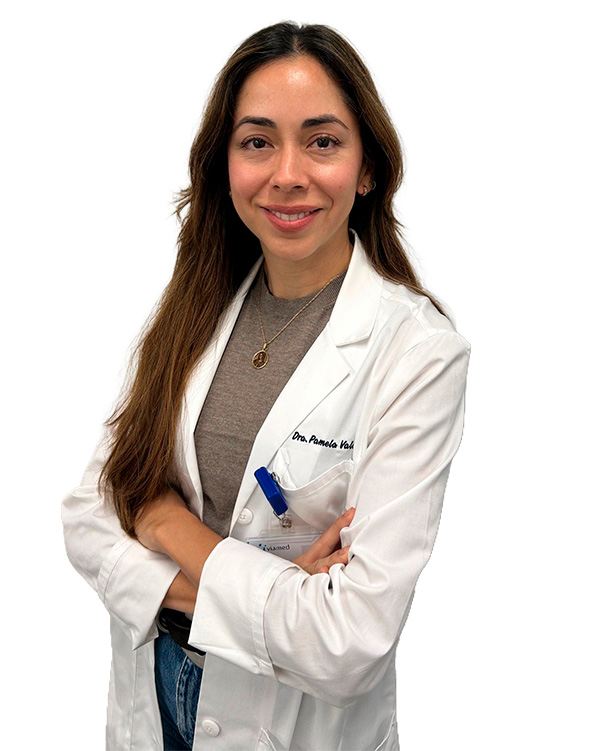
Dr. Pamela Valdivieso Mejía

gynaecologist and specialist in assisted reproduction

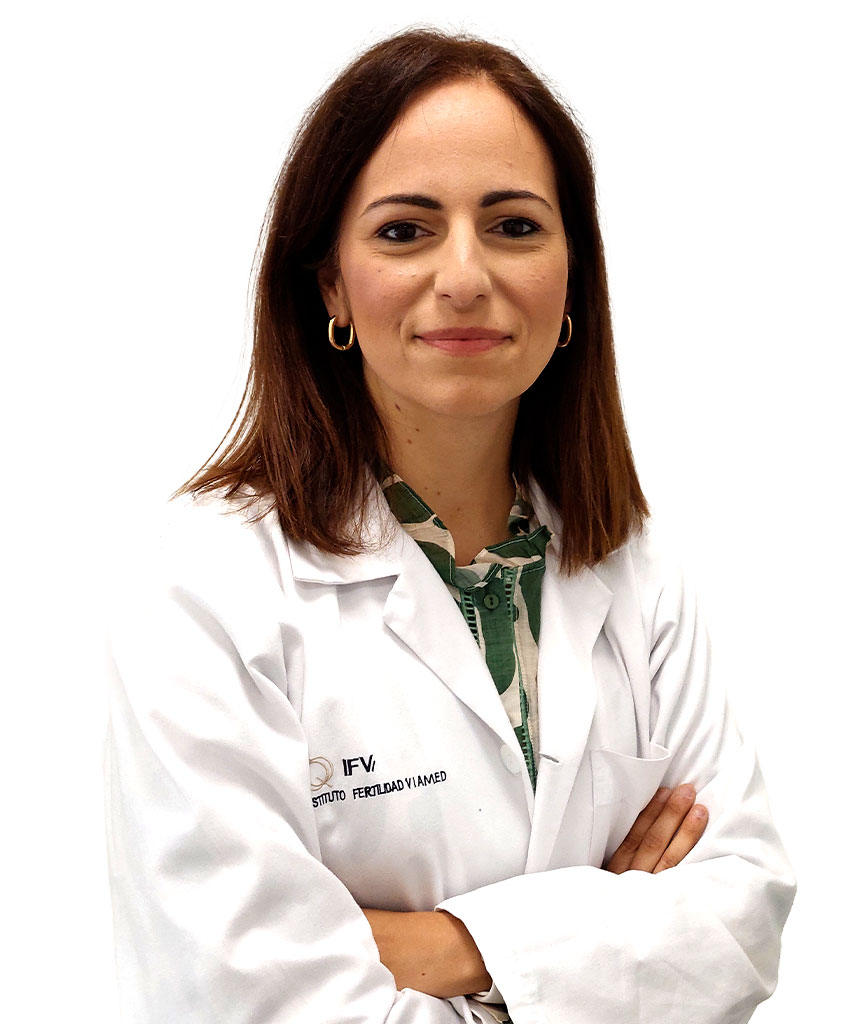
Dr. Silvia Valladares Jiménez

Specialist in Endocrinology and Nutrition

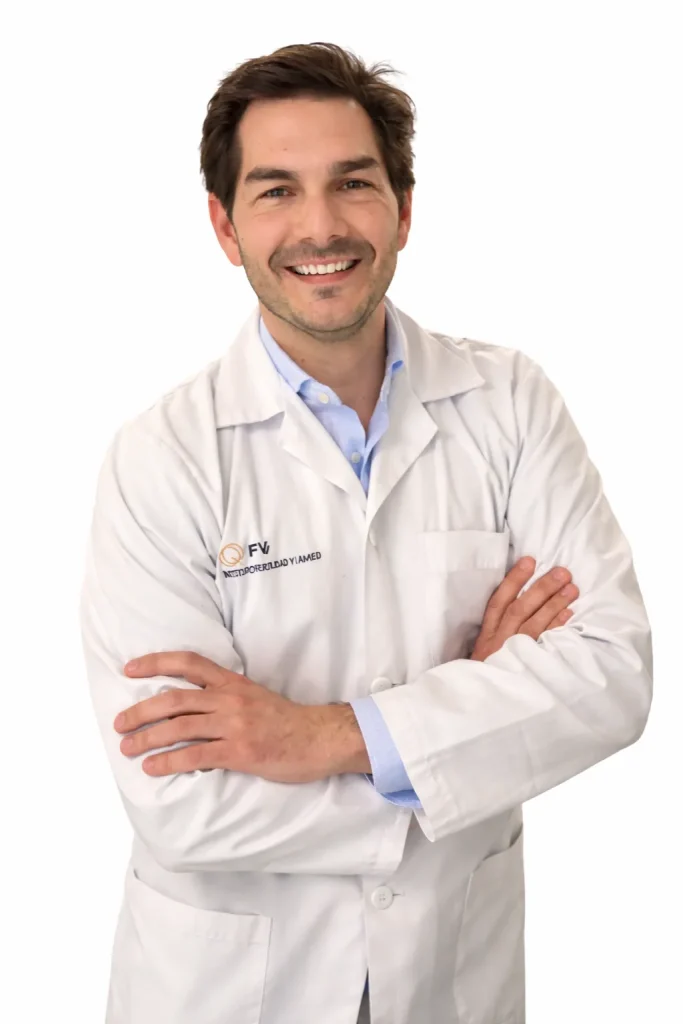
Dr. José Vilar

GYNAECOLOGIST

Education and Qualifications

  • Medical Degree from the University of Cádiz.
  • Specialist in Obstetrics and Gynaecology, Hospital Universitario Puerta del Mar, Cádiz.

Professional Experience

  • Gynaecologist at IVI Málaga (2013–2018).
  • Gynaecologist at Grupo Internacional UR (2020–2025).
  • Gynaecologist at IFV (2026–present).
  • Consultant in Obstetrics and Gynaecology at the Andalusian Health Service (2019–present).

Qualifications and Awards

  • PhD in Medicine from the University of Cádiz.

Scientific Activity

  • Co-author of several scientific publications in international journals and presentations delivered at national and international conferences.
  • Co-author of several chapters in specialised books on Gynaecology and Assisted Reproduction.

Ángeles Bretón

CLINICAL EMBRYOLOGIST

Dr. Carlos Javier Vega Reina

GYNAECOLOGIST

Dr. María Miró

IMMUNOLOGIST

Dr. María Eugenia Molina

HEMATOLOGIST

Elena Mantrana Bermejo

Gynecologist. Specialist in Reproductive Medicine

  • Degree in Medicine and Surgery from the University of Seville.
  • Specialty in Obstetrics and Gynecology at Hospital Universitario de Valme, Seville.
  • Master’s Degree in Human Reproduction from the Universidad Rey Juan Carlos.
  • Specialist Physician of the Andalusian Health Service in the South Health Management Area (AGSS) of Seville.
  • Coordinator of the Assisted Human Reproduction Unit of the Hospital Universitario de Valme, Seville.
  • Member of the Human Reproduction Advisory Committee of AGSS of Seville.
  • Member of the working group for the update of the Guide for Assisted Human Reproduction of the Ministry of Health of the Andalusian Regional Government.
  • Tutor of Specialist Doctors in Training of the Teaching Area of the University Hospital of Valme.
  • Clinical Tutor Medical Students University of Seville

Alberto Armijo

Gynecologist. Reproductive Medicine Specialist