PregnancyLoss Test in Seville

At Viamed Fertility Institute, we understand that after a pregnancy loss, the most urgent and painful question you ask yourselves is always the same: “Why did it happen?”

We know that the emotional impact of this moment is immense. To offer you precise and clear answers without adding further physical stress to your body, we incorporate the PregnancyLoss Test, an advanced solution that analyses the genetic causes of the loss using cutting-edge technology.

Located in the safe environment of Viamed Hospital Santa Ángela de la Cruz, we place this innovation at your service to transform uncertainty into a firm starting point, seeking the real answers that your Life Project needs in order to move forward with complete confidence.

What makes the PregnancyLoss Test different and how does it help?

Traditionally, in order to understand why a pregnancy stopped developing, it was necessary to analyse remains of biological tissue. However, this classic method has significant limitations: cells often do not grow properly in the laboratory, or the sample may become contaminated with the mother’s DNA, preventing a clear and definitive diagnosis.

This test completely changes the rules of the game thanks to a high-technology approach that shows maximum respect for the patient:

It is a non-invasive test

It only requires a conventional maternal blood sample. This completely eliminates the need to collect biological remains or undergo additional surgical procedures after the loss.

Latest-generation technology, NGS

By using Next-Generation Sequencing techniques, our laboratory analyses the free fetal DNA that naturally circulates in the mother’s bloodstream.

Rapid diagnosis

Results are usually available within just a few days. This allows us to minimise the painful uncertainty and emotional waiting time, helping the couple process the situation with conclusive medical data.

Safety and precision: the value of carrying out the study at Viamed Hospital Santa Ángela de la Cruz

Approaching a genetic study after pregnancy loss requires a level of precision that only a highly complex hospital environment can ensure. At our centre in Seville, the PregnancyLoss Test benefits from first-class medical infrastructure:

Rigour in cytogenetics and NGS

Massive sequencing is processed under strict biological quality controls and automation to rule out any type of human error or sample contamination.

Hospital traceability

With the support of the Viamed Salud group, each blood sample is managed with maximum speed and safety, guaranteeing that the analysis of free fetal DNA is accurate.

Comprehensive medical approach

Our team of gynaecologists, geneticists and psychologists interprets the results jointly in order to design the ideal reproductive strategy for your next attempt.

What exactly does the test analyse?

The PregnancyLoss Test performs in-depth molecular screening to detect fetal chromosomal abnormalities that are responsible for the vast majority of spontaneous pregnancy interruptions:

Aneuploidies

It detects alterations in the correct number of chromosomes, such as trisomies, which are responsible for early developmental failure.

Large deletions and duplications

It identifies significant losses or gains of DNA fragments that completely prevent fetal development.

Sex chromosomes

It carries out a detailed assessment of possible alterations in the X and Y chromosomes.

Who is the PregnancyLoss Test recommended for?

This test has become a key diagnostic tool within our resources in Seville, and is specifically recommended in the following clinical situations:

Early spontaneous pregnancy losses

It offers a very early diagnostic window, as it can be performed reliably from week 5 of pregnancy.

Anembryonic sacs

Pregnancies in which the gestational sac develops, but the embryo cannot be visualised by ultrasound.

Recurrent pregnancy loss or recurrent miscarriage

It is essential for couples who have experienced more than one loss and need an in-depth, risk-free genetic study before starting a new fertility treatment.

FAQs: frequently asked questions about the PregnancyLoss Test in Seville

Yes, from a genetic perspective it represents a far superior alternative. By analysing free fetal DNA in maternal blood, we obtain the fetal chromosomal information without the need to go through the operating theatre to collect biological remains, while also avoiding the risk of contamination with maternal cells.

By using Next-Generation Sequencing, or NGS, the sensitivity for detecting chromosomal abnormalities is extremely high and objective, offering a clear map of the molecular causes that stopped development.

Of course. Discovering that the cause of the loss was a chromosomal alteration in the fetus gives us the key to future success. It allows us to guide your treatment at IFV Sevilla towards advanced selection techniques, such as Preimplantation Genetic Testing (PGT), ensuring that the next embryo transferred is chromosomally healthy.

Your Life Project deserves real answers

Do not remain with unanswered questions or leave your next attempt to chance. If you have experienced the hardship of pregnancy loss, come to Viamed Hospital Santa Ángela de la Cruz. Let cutting-edge science and the human commitment of our team in Seville give you the answers you need to trace a safe path towards your baby.

We are here to support you.

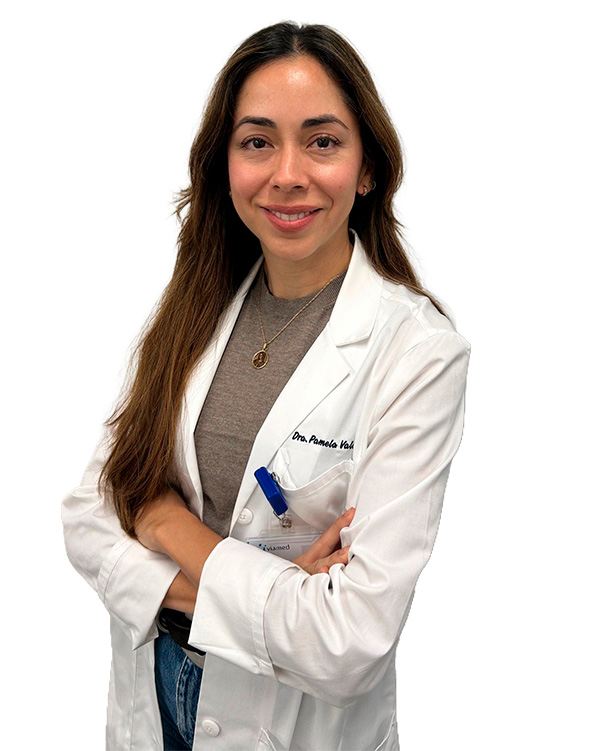
Dr. Pamela Valdivieso Mejía

gynaecologist and specialist in assisted reproduction

Dr. Silvia Valladares Jiménez

Specialist in Endocrinology and Nutrition

Dr. José Vilar

GYNAECOLOGIST

Ángeles Bretón

CLINICAL EMBRYOLOGIST

Dr. Carlos Javier Vega Reina

GYNAECOLOGIST

Dr. María Miró

IMMUNOLOGIST

Dr. María Eugenia Molina

HEMATOLOGIST

Elena Mantrana Bermejo

Gynecologist. Specialist in Reproductive Medicine

  • Degree in Medicine and Surgery from the University of Seville.
  • Specialty in Obstetrics and Gynecology at Hospital Universitario de Valme, Seville.
  • Master’s Degree in Human Reproduction from the Universidad Rey Juan Carlos.
  • Specialist Physician of the Andalusian Health Service in the South Health Management Area (AGSS) of Seville.
  • Coordinator of the Assisted Human Reproduction Unit of the Hospital Universitario de Valme, Seville.
  • Member of the Human Reproduction Advisory Committee of AGSS of Seville.
  • Member of the working group for the update of the Guide for Assisted Human Reproduction of the Ministry of Health of the Andalusian Regional Government.
  • Tutor of Specialist Doctors in Training of the Teaching Area of the University Hospital of Valme.
  • Clinical Tutor Medical Students University of Seville

Alberto Armijo

Gynecologist. Reproductive Medicine Specialist